Why Hotel Lighting Projects Get Delayed: 7 Procurement Mistakes That Cost Hotels Time and Money
Why Hotel Lighting Projects Get Delayed: 7 Procurement Mistakes That Cost Hotels Time and Money
Most hotel lighting delays originate months before factory production begins.
A missing certification requirement. An unfinished shop drawing. A finish approval that takes longer than expected. A production schedule based on assumptions instead of actual factory capacity.
By the time these issues become visible on site, the project schedule has already been affected.
In hospitality construction, lighting connects design, procurement, engineering, manufacturing, logistics, inspections, and installation. When one production process falls behind, the delay spreads directly to multiple trades and eventually impacts the hotel opening schedule.
After supporting hospitality lighting projects across guest rooms, corridors, lobbies, restaurants, and public spaces, the team at Minoze Lighting has found that the same problems appear repeatedly. Most lighting-related delays are preventable. The root causes are identifiable and addressable before production begins.
This guide identifies the seven root causes of hotel lighting project delays and the specific actions owners, designers, procurement teams, and contractors take to eliminate them before they affect the timeline.
Why Hotel Lighting Delays Matter
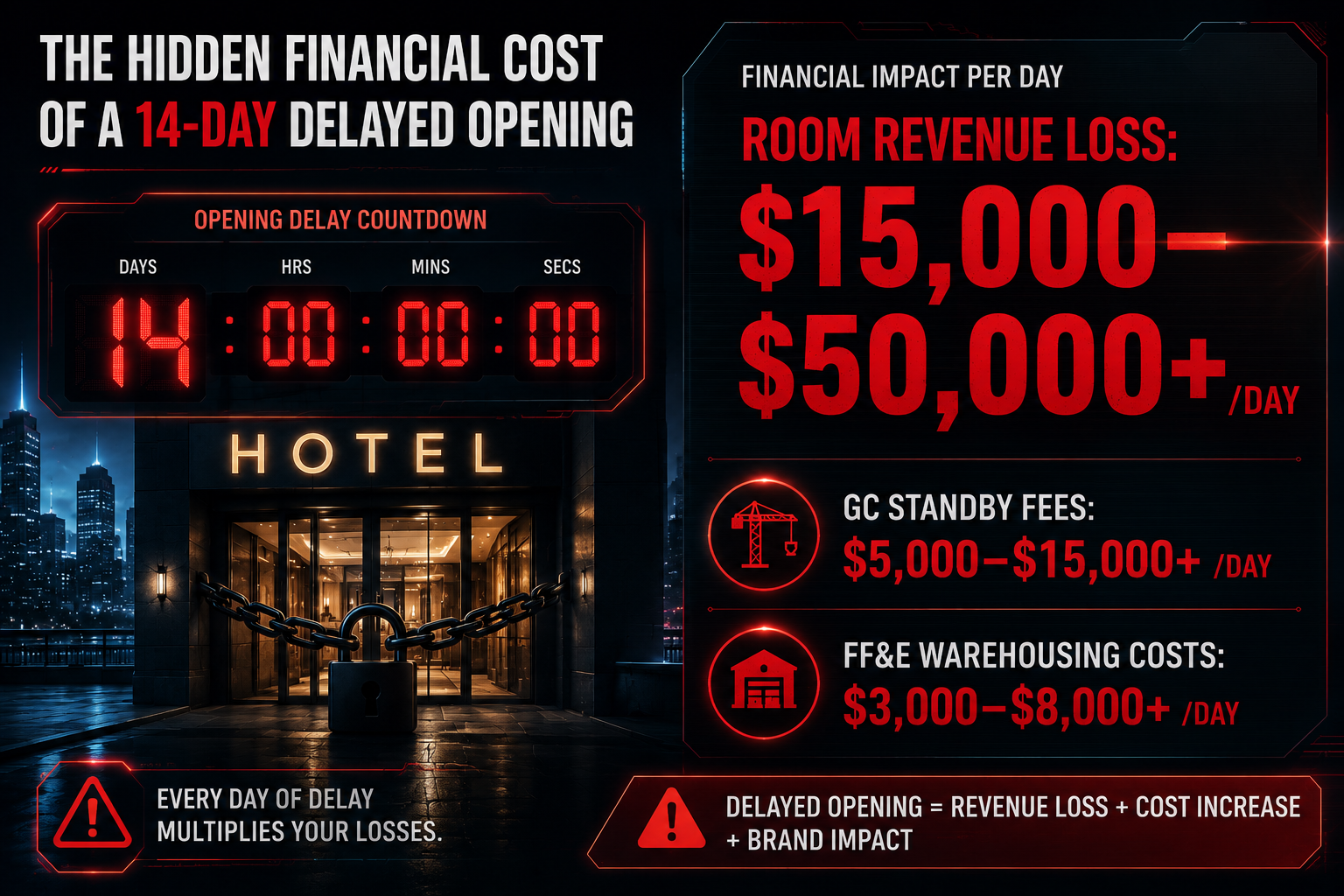
When evaluating lighting suppliers, many buyers focus heavily on fixture pricing. In reality, a delayed opening eliminates more revenue than the entire lighting procurement budget — often within the first 72 hours.
A hotel opening delay directly impacts each of the following:
- Room revenue and occupancy income
- General contractor labor costs
- FF&E installation schedules
- Final electrical and occupancy inspections
- Staff training timelines and marketing launch plans
- Guest reservations and brand reputation
The financial impact compounds daily when multiple trades are waiting on lighting installation.
The Hidden Cost of a Two-Week Delay
| Impact Area | Potential Consequence |
|---|---|
| Guest room revenue | Lost occupancy income, often tens of thousands per day |
| General contractors | Extended site labor expenses and overhead |
| FF&E installation | Subcontractor scheduling conflicts and standby fees |
| Final inspections | Delayed local authority approvals and occupancy certificates |
| Hotel operations | Postponed grand opening dates and disrupted marketing |
| Brand standards review | Additional friction and project coordination costs |
For procurement teams, avoiding delays is core to effective risk management. It is consistently more valuable than negotiating a slightly lower fixture price.
7 Procurement Mistakes That Cause Hotel Lighting Delays
1. Incomplete Lighting Specifications Create Delays Before Production Starts
One of the most common causes of delay occurs before manufacturing even begins. Hotel lighting schedules contain missing or incomplete information in the majority of first-submission RFQs, including:
- Exact fixture dimensions and mounting details
- Precise finish requirements such as brushed vs. satin or custom powder coating
- Shade materials and flame-retardant properties
- Voltage requirements and dimming system compatibility (0-10V, TRIAC, DALI)
- Exact certification requirements (UL, ETL, CE)
When specifications are incomplete, manufacturers must stop and request clarification before engineering can proceed. A small missing detail can easily add weeks to a project schedule.
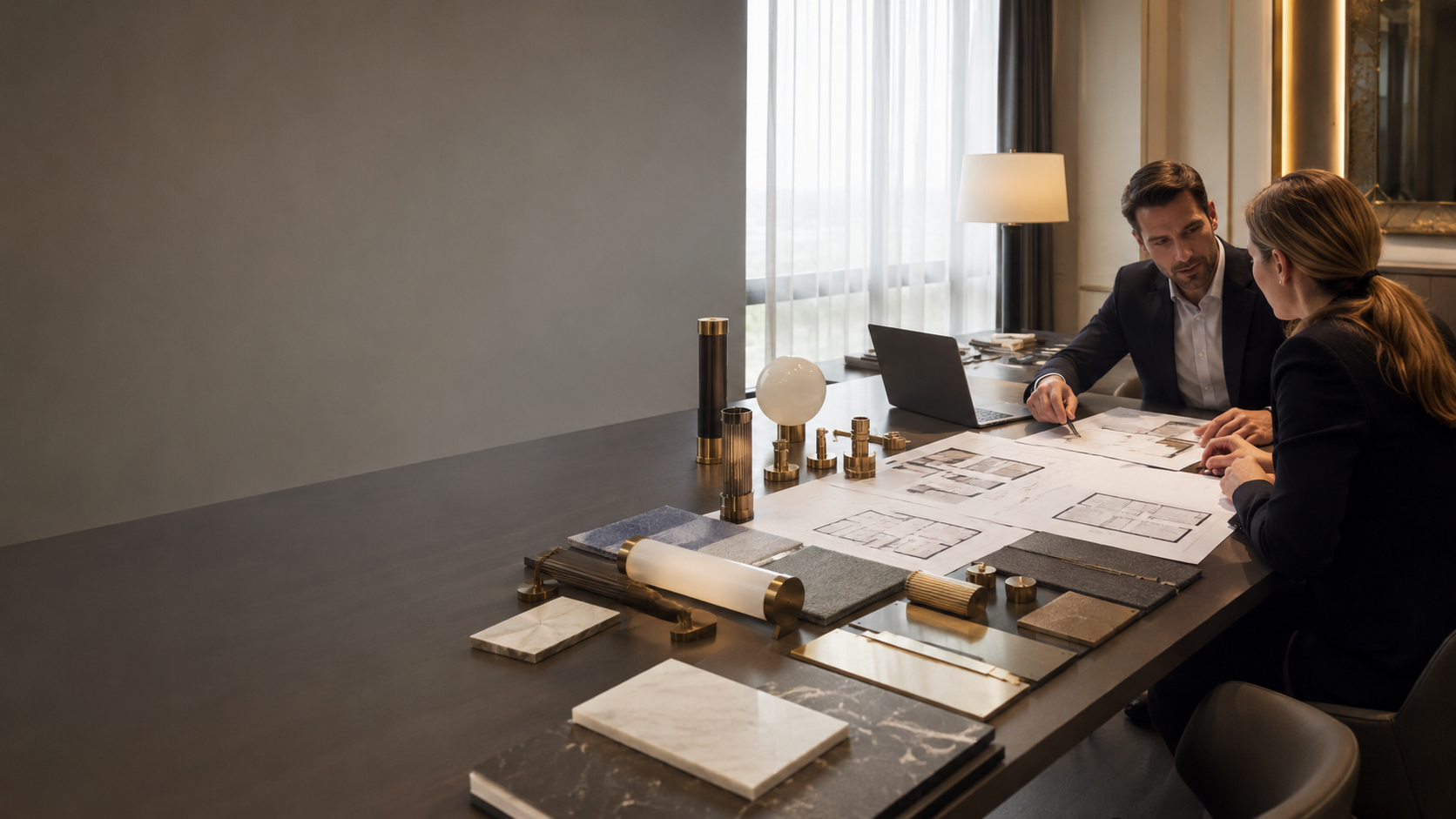
What procurement teams should do. Before requesting quotations, verify all fixture schedules, confirm finish selections, and coordinate lighting specifications with interior design documents. At Minoze Lighting, our engineering team cross-checks your schedules with technical compliance standards within 48 hours to catch these gaps before they cost you time.
2. Late Certification Reviews Trigger Inspection Failures and Replacement Costs
Certification failures are the single most expensive cause of hotel lighting delays. Many buyers assume that using UL recognized components automatically means the entire fixture is compliant.
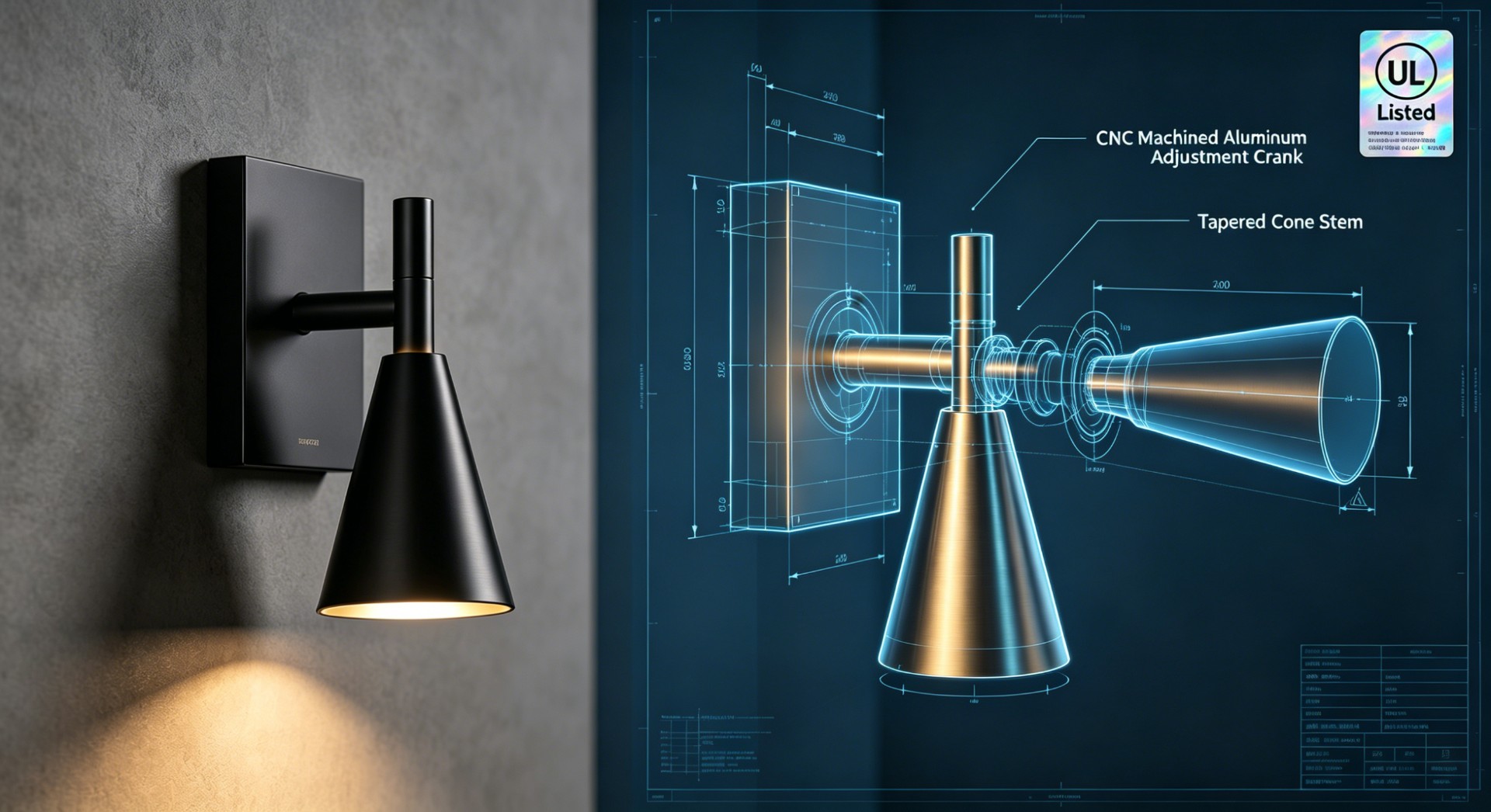
In practice, local electrical inspectors require the complete fixture to be UL Listed or ETL Listed.
When certification questions surface after sample approval or during mass production, modifications halt the production line and invalidate completed units.
Potential consequences:
- Failed site inspections
- Product rejection by local authorities
- Costly field evaluations or additional engineering reviews
- Replacement orders and scrapped materials
- Delayed occupancy approvals
What procurement teams should do. Certification requirements should be confirmed during supplier evaluation, not after production begins. Minoze Lighting ensures specification-grade hospitality fixtures are built to strict UL and ETL standards, guaranteeing a 100% pass rate for site inspections.
3. Design Approval and Production Approval Are Two Separate Milestones
Receiving an approved sample is an important milestone. However, many hospitality projects mistakenly assume that sample approval means mass production can begin the next day.
Engineering reviews for mass production continue after the aesthetic sample stage to optimize for structural integrity and scalability. Potential issues include:
- Heavy-duty mounting systems for public spaces
- Structural support and driver placement
- Wiring access and ease of installation for on-site contractors
- Material substitutions that affect weight or heat dissipation
A fixture may look perfect from a design perspective while still requiring engineering adjustments before manufacturing.
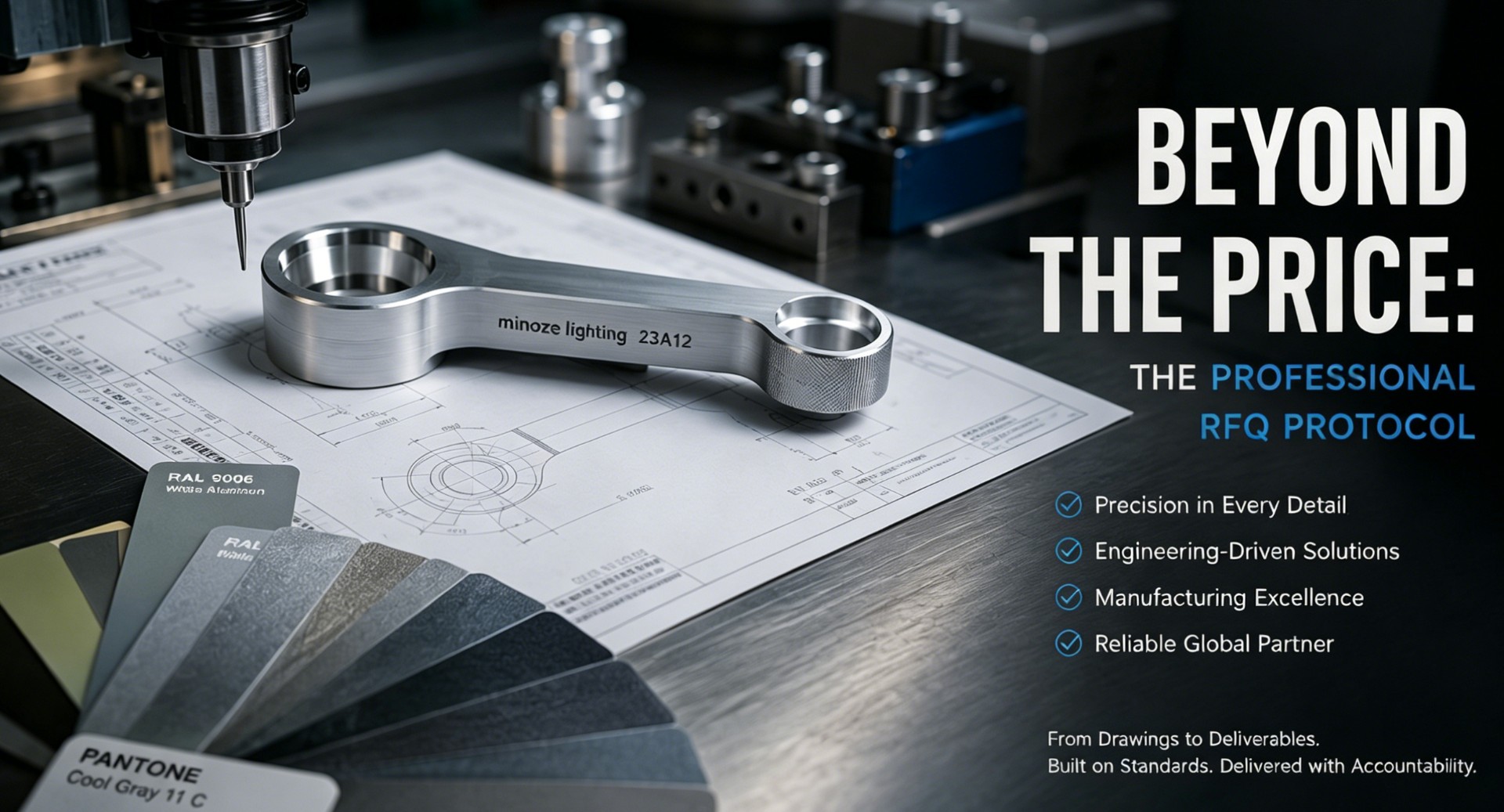
What procurement teams should do. Treat design approval and production approval as separate milestones. Ensure your manufacturer reviews critical structural components — such as CNC-machined parts or aluminum adjustment cranks — to confirm that what is approved on paper matches the physical durability required for high-traffic hotel environments.
4. Unrealistic Lead Times Create Schedule Pressure
One of the biggest mistakes in hospitality procurement is relying on overly optimistic delivery promises. Custom lighting production is a multi-stage manufacturing process that cannot be rushed without sacrificing quality.
Typical Custom Hotel Lighting Timeline
| Project Stage | Typical Duration |
|---|---|
| Production Drawings | 1 - 3 days |
| Raw Material Preparation | 2 - 3 days |
| Injection Molds | 20-40 days |
| Laser Welding, Bending, Metal Forming | 3-5 days |
| CNC Machining | 2 - 3 days |
| Sample Approval | 3-15 days (without mold fabrication) |
| Mold Making (glass, resin, spin-forming molds) | 5-7 days |
Timelines vary by fixture complexity, order volume, and factory capacity. Add 20% buffer for seasonal peak periods.
What procurement teams should do. Always ask suppliers for milestone-based schedules instead of a single delivery date. Reliable schedules are built on actual factory production capacity, not best-case assumptions. This is the foundation of timely delivery and the most effective way to reduce costs tied to delays.
5. Inadequate Packaging Causes Transit Damage and Replacement Delays
Hotel lighting fixtures include fragile materials — glass shades, metalwork, stone elements, and fabric lampshades. Shipping damage without engineered packaging disrupts installation schedules and triggers replacement orders.
Replacement components shipped internationally add 3–6 weeks to the schedule. A damaged fixture discovered days before a grand opening can affect multiple guest rooms or public spaces simultaneously.
What procurement teams should do. Before production begins, audit your supplier's packaging protocols. Minoze Lighting enforces strict drop-testing procedures and uses customized high-density foam packaging engineered for fragile components. Our continuous improvement protocols ensure product quality is maintained from first sample to final shipment, achieving a documented 0% transit damage rate on ISTA-tested shipments.
6. Unverified Supplier Capacity Creates Production Bottlenecks
Many procurement teams evaluate suppliers on product quality and unit price alone, without verifying production capacity or project management capability. A factory may produce a small-batch prototype run while lacking the capacity for a large multi-story hospitality rollout.
Warning signs of insufficient capacity:
- Delayed responses to technical inquiries
- Frequent changes to promised timelines
- Slow sample turnaround times
- Lack of structured, proactive project updates
What procurement teams should do. Require written answers to these questions before issuing a purchase order: What is your monthly production capacity? How does your capacity planning handle peak-season rollouts? How many hospitality projects are currently on your floor? Do you have dedicated B2B project managers? Working with an experienced manufacturer ensures professional production management and smart resource allocation. You get a single point of contact keeping your project on track.
7. Last-Minute Design Changes Affect Every Trade
Design changes made after engineering approval are one of the top three causes of production delays in custom hotel lighting projects. Typical examples include:
- Finish revisions such as switching from chrome to brushed brass
- Shade material or fabric swaps
- Fixture size or scale adjustments
- Driver specification changes due to updated dimming systems
- Mounting modifications for revised ceiling types
Each post-approval change requires new shop drawings, updated certifications, material reorders, and a revised production schedule — adding 2–4 weeks minimum. What looks like a short term fix generates long-term cost. The cost savings from avoiding mid-production changes are significant.
What procurement teams should do. Establish clear deadlines for design sign-offs and avoid non-essential revisions once production planning begins. If a change is unavoidable, coordinate immediately with your lighting manufacturer to assess the exact timeline impact.
Summary: What We See Most Often
Many people assume that unexpected manufacturing failures are the primary cause of project delays. In practice, delays are more commonly caused by upstream coordination issues:
Incomplete Specs → Late Certification Reviews → Unrealistic Timelines → Last-Minute Changes
Most of these problems appear early in the procurement process but remain unnoticed until manufacturing is already underway. By then, finished products are at risk and production management becomes reactive rather than planned. The most successful hospitality projects identify these risks before they become schedule problems.
Recommended Procurement Timeline
To meet the construction schedule without delays, align your procurement schedule with the following buffer-inclusive timeline prior to hotel opening:
- Design development and RFQ: 6–12 months before opening
- Shop drawings and engineering: 5–8 months before opening
- Sample production and approval: 4–6 months before opening
- Mass production: 3–5 months before opening
- Delivery and site installation: 1–2 months before opening
Hotel Lighting Delay Prevention Checklist
Before placing your next hospitality lighting purchase order, confirm the following:
- Lighting specifications are 100% complete (dimensions, finishes, electrical specs)
- Certification: active UL Listed or ETL Listed file number confirmed in the NRTL database before RFI closes — not after sample approval
- Shop drawings are approved by the design and engineering teams
- Aesthetic and functional samples are approved in writing
- A milestone-based production schedule (shop drawings → samples → mass production → QC → transit) is documented in writing by the manufacturer
- Supplier capacity is confirmed to handle the volume without bottlenecks
- Packaging and drop-testing standards are reviewed and approved
- Logistics and customs clearance timelines are factored in — minimum 3–6 weeks for ocean freight to North America
- Design approvals are finalized to eliminate mid-production changes
Frequently Asked Questions
How long does custom hotel lighting take?
Custom hotel lighting projects require 10–20 weeks from drawing approval to final delivery. Complex fixtures or large volumes extend this to 24 weeks. This estimate does not include the sample approval stage, which adds 3–7 weeks to the overall timeline.
Can certification issues delay hotel openings?
Yes. Missing or incorrect complete-fixture certifications — such as lacking a full UL or ETL Listing — can lead to failed electrical inspections, forced replacement orders, and delayed occupancy approvals from city inspectors. Certification must be verified at the RFI stage, not after production begins.
When should hotel lighting procurement begin?
For custom hospitality projects, procurement and RFQ engineering should ideally begin 6–12 months before the planned opening date. This allows time for proper sample approvals, engineering reviews, mass production, and transit buffers.
What information should be included in a hotel lighting RFQ?
A comprehensive hotel lighting RFQ is the foundation of successful hospitality procurement. It should include complete fixture schedules, quantities, precise material finishes, required certifications, installation environment conditions (damp or wet ratings), dimming protocols, and target delivery dates. Incomplete RFQs are one of the most common causes of early project delays.
How can procurement teams avoid supplier-related delays?
Partner with experienced hospitality lighting manufacturers. Verify their production capacity early. Confirm certification compliance before placing a deposit. Establish milestone-based tracking instead of relying on a single estimated delivery date. Request references from completed 4-star and 5-star hospitality projects.
Planning a Hotel Lighting Project?
Do not let compliance bottlenecks, vague specifications, or manufacturing delays freeze your timeline. Contact the hospitality project experts at Minoze Lighting today. Send us your fixture schedule and our engineering team will provide a technical specification and manufacturing readiness review within 48 hours.
Contact our team at simon@minozelighting.com